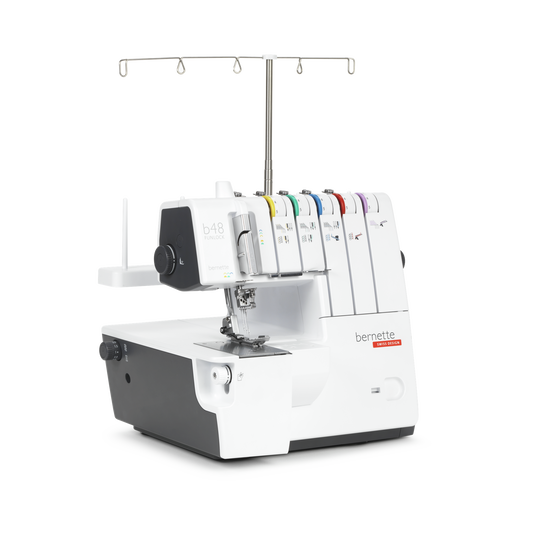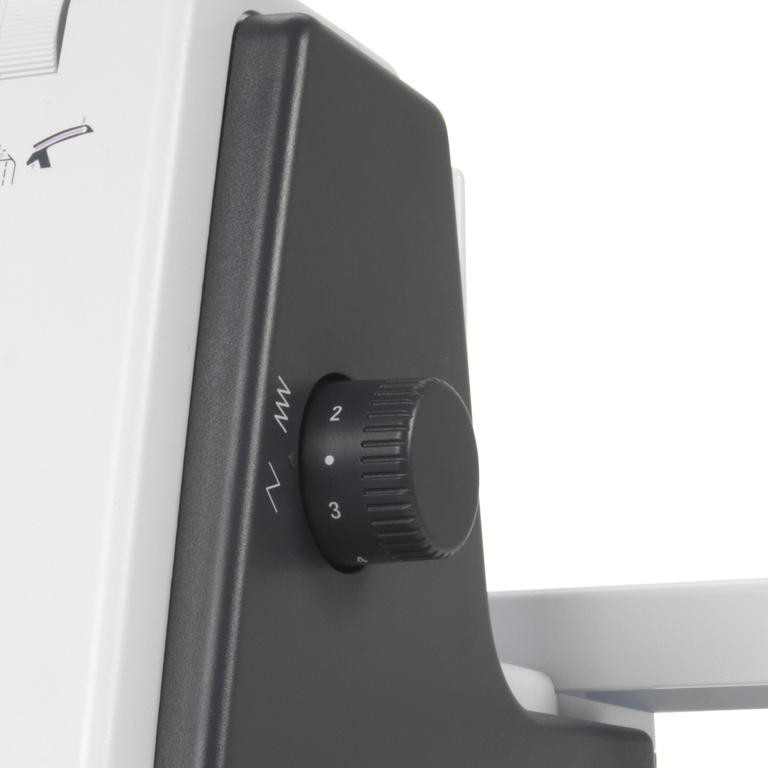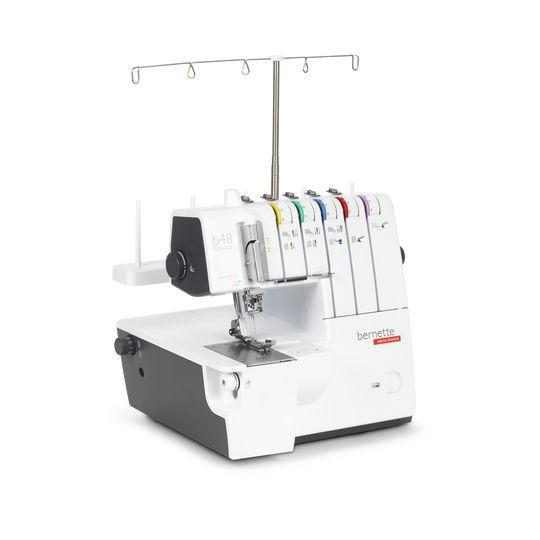
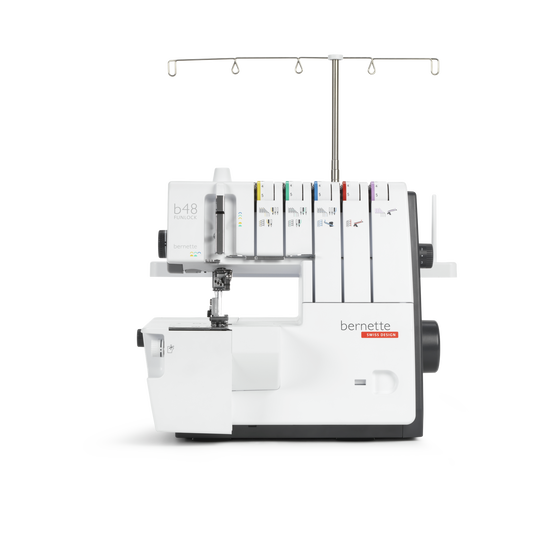

bernette 48 FUNLOCK
Art. Nr. 5240007106
895.00 CHF
Verfügbarkeit im Online Shop:
  • Verfügbar

bernette 48 FUNLOCK
Art. Nr. 5240007106
bernette 48 FUNLOCK image number

Produktbeschreibung


Beschreibung

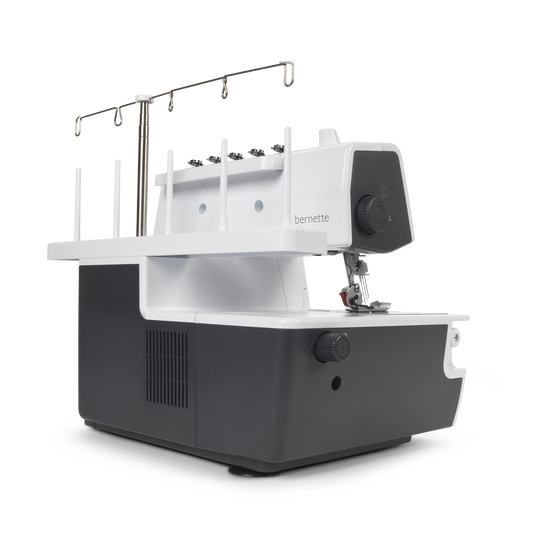
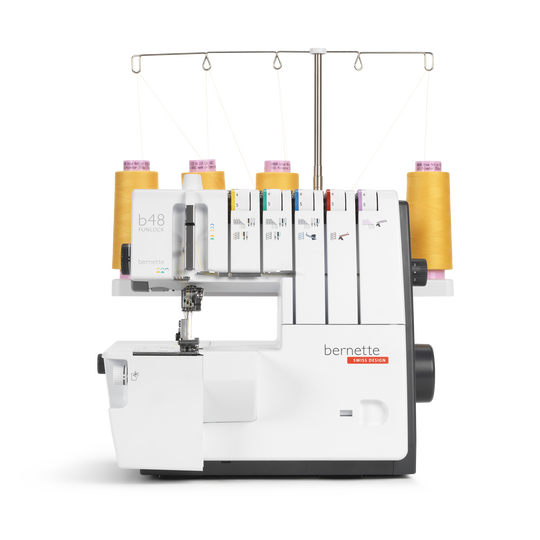
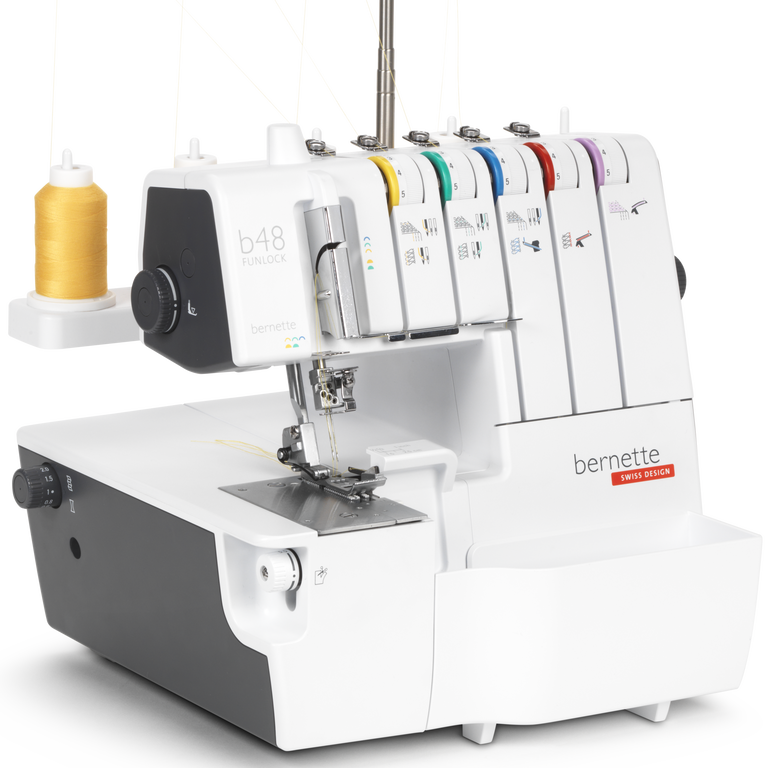
Deine kompakte Combo-Maschine, die in einem Zug näht, schneidet und versäubert, damit jede Naht rockt.

Besonderheiten

  • 2-, 3-, 4- und 5-Faden-Nähte
  • Breite Overlockstiche: 3-7 mm
  • Breite Coverstiche: 2,8 / 5,6 mm
  • Breite Combostiche: bis zu 10 mm
  • Breite Rollsaumstiche: 1,5 mm
null

Eine Vielfalt an Stichen für schöne Nähte und Säume


Deine bernette 48 FUNLOCK weist eine Vielfalt an Stichen auf: Ob Sicherheitsnähte oder Abschlüsse mit Overlockstichen, Coverstichen, Stichen wie Super Stretch für hochelastische Materialien, Flachnähte, Rollnähte, Rollsäume oder Kettenstichnähte – die Möglichkeiten deiner bernette 48 FUNLOCK sind nahezu grenzenlos.
null

Einfaches Einfädeln


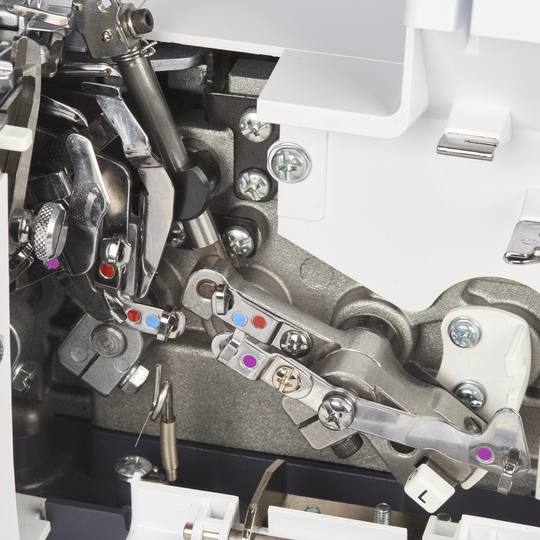
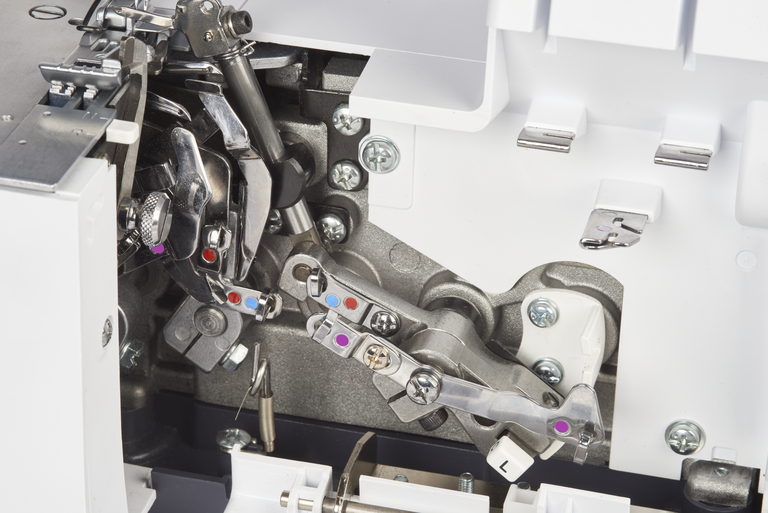
Folgst Du den farbig markierten Einfädelwegen der bernette 48 FUNLOCK, wird das Einfädeln zu einem Kinderspiel. Separater Nadeleinfädler und Greifereinfädlemechanik erleichtern dies zusätzlich.
null

Grosser Arbeitsbereich für grosse Nähprojekte


Mit ihrem 87 mm grossen Arbeitsbereich bietet die bernette 48 FUNLOCK viel Platz für grössere Nähprojekte. Ein weiteres Highlight ist das helle LED-Licht, das den Bereich unter der Nadel stets gut ausleuchtet.
null

Hohe Nähgeschwindigkeit für effizientes Arbeiten


Die bernette 48 FUNLOCK ermöglicht sehr schnelles Nähen auf längeren Geraden. Mit bis zu 1300 Stichen pro Minute und präzisen Stichen nehmen deine Nähprojekte in kürzester Zeit Gestalt an.


Merkmale & Funktionen

Elektronischer Fussanlasser
Abmessungen der Maschine L / B / H [mm]
360 300 290
Gewicht Maschine [kg]
7,800 g
Freiarmlänge rechts von der Nadel [Zoll / mm]
87 mm
Höhe des Arbeitsbereichs [Zoll / mm]
60 mm
Spulenhalter [Nummer]
5
Hauptmotor, Typ
AC
Maximale Nähgeschwindigkeit [spm]
1,300 spm
Staubpinsel
Nadelsortiment
Netz für Oberfadenspulen
Staubschutzhauben
Zubehörbox

Tutorials

b48 + b44 + b42 Tutorial – Preparation (1/15)
Further information is available at http://www.mybernette.com Do you want to start using your b48, b44 or b42 for the first time? In our video tutorial, we show you the first steps. How do you attach and align the thread stand and the thread guide holder correctly? How do you connect the mains cable and the foot control, and where is the looper cover, as well as the accessories stored inside it? This basic information will help you get to know your overlocker and prepare for your first sewing project!
b48 + b44 + b42 Tutorial – Preparation (1/15)
b48 + b44 + b42 Tutorial – Rethreading (2/15)
Further information is available at http://www.mybernette.com In this video tutorial for your b48, b44 or b42, you will learn important basic information about rethreading, such as: when do you use the spool stabilizers? How can you tie directly onto threads for easy rethreading? How do you separate the thread chain, how do you pull the needle threads through first and then the separate looper threads?
b48 + b44 + b42 Tutorial – Rethreading (2/15)
b48 + b44 Tutorial – Overlock threading (3/15)
b48 + b42 Tutorial – Coverstitch/chainstitch (10/15)
b48 + b44 Tutorial – Thread tension and overlock stitch optimization (5/15)
Further information is available at http://www.mybernette.com The appearance of the overlock stitches on your b48 or b44 is influenced by the type of fabric, the thread, the needles, stitch length and differential feed. To allow the threads to interlock loosely, first loosen one thread tension before you tighten another. In this video tutorial, we show you how to control and optimize the thread tension for the various types of overlock stitches. We show you what details you should consider for the following stitches: 4- and 3-thread overlock and 3-thread narrow seams, 3-thread roll hems, and 3-thread flatlock stitches.
b48 + b44 Tutorial – Thread tension and overlock stitch optimization (5/15)
b48 + b44 + b42 Tutorial – Stitch length and differential feed (7/15)
b48 + b44 Tutorial – Stitch width, cutting width, rolled hem (8/15)
b48 + b44 Tutorial – Upper looper converter (9/15)
b48 + b44 Tutorial – Basic overlock settings and sewing test (4/15)
Further information is available at http://www.mybernette.com With the help of this video, you can try out your first overlock stitch sewing test on your bernette 48 or bernette 44. What basic settings do you need to sew your first stitches? What do the thread tension, stitch length and differential feed do? How do you set the knife to the correct position, and how do you use the roll hem lever and presser foot pressure? When you have laid all the threads from the looper eye and the needle eye under the presser foot, lower the foot and you can slowly start to sew. The excess seam allowance is automatically cut off during the process.
b48 + b44 Tutorial – Basic overlock settings and sewing test (4/15)
b48 + b44 + b42 Tutorial – Changing the needles and needle threader (6/15)
Further information is available at http://www.mybernette.com This video tutorial shows you how to change the needles on your b48, b44 or b42, and how to use the needle threader. When you open the looper cover, you will find a needle holder and an appropriate screwdriver. To change a needle, first loosen the needle screw slightly. When you then wiggle the needle slightly, it will come out. Now insert the new needle into the needle clamp and push it all the way up into the correct position. You can then tighten the needle screw again. The video continues showing the use of the needle threader, which you orient with the notch up. You can then insert the thread horizontally and guide it along the needle groove with little pressure until the thread is guided through the needle eye. Now you can pull the thread through the eye of the needle with ease.
b48 + b44 + b42 Tutorial – Changing the needles and needle threader (6/15)
b48 + b42 Tutorial – Coverstitch/chainstitch: basic settings and sewing test (11/15)
Further information is available at http://www.mybernette.com Would you like to carry out your first sewing test using coverstitch or chainstitch on your b48 or b42? Coverstitch is ideal for sewing hems, for example on elastic materials. In this video tutorial, we take you through the process, from the basic settings to sewing for the first time. First, we check the thread tensions, the stitch length setting, the differential feed setting and the presser foot pressure. Then we cut back the looper thread and make sure that the needle threads are not twisted. Now we start sewing, using the markings on the cover as guidelines. The first stitches are secured by the subsequent stitches, it is up to you to secure the last stitches manually.
b48 + b42 Tutorial – Coverstitch/chainstitch: basic settings and sewing test (11/15)
b48 + b42 Tutorial – Stitch optimisation for coverstitch and chainstitch (12/15)
b48 Tutorial – Converting from overlock to coverstitch/chainstitch (13/15)
b48 Tutorial – Basics of combo stitches (14/15)
b48 + b44 + b42 Tutorial – Maintenance (15/15)
Further information is available at http://www.mybernette.com It is important to take a little time to regularly clean and maintain your b48, b44 or b42, because during sewing and cutting, fabric, thread and, of course, dust residues build up. In this video tutorial, we show you how to care for your bernette properly. When you open the looper cover, you will find a brush. In the accessory box you will also find a screwdriver and the overlock machine oil. The video shows you exactly how to remove the presser foot and the stitch plate to clean your machine in this area. We then show you which parts you can oil and what to do to make sure the oil is well distributed.
b48 + b44 + b42 Tutorial – Maintenance (15/15)